

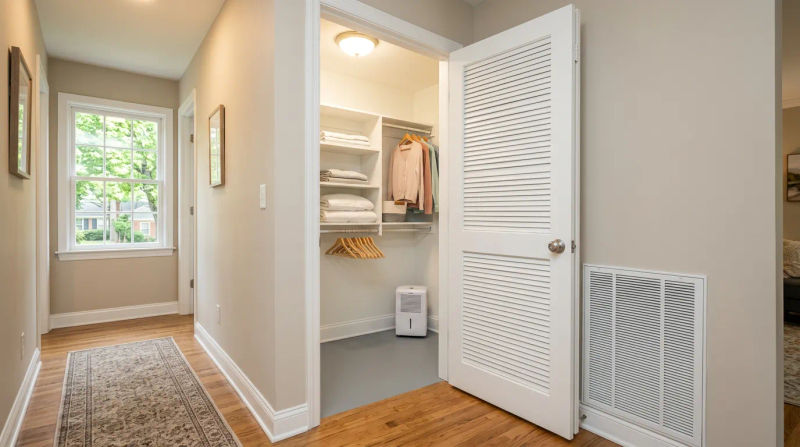
As the Fleet Operations Manager at Trust Key Transportation, my world revolves around logistics, efficiency, and dispatching the right team for the job. While we're known for our reliable service vehicles across Birmingham, the real story is what our expert crews accomplish once they arrive. A call we received from a homeowner in Hoover this past September is a perfect example of the challenges we solve. The client was dealing with a persistent musty smell in their master bedroom closet, a problem that had recently worsened after a week of heavy rain from a late-season storm system. They noticed dark, fuzzy spots appearing along the baseboards and knew it was time to call for professional help.
This is a scenario we see often, especially in the beautiful, large homes built in the 1990s and 2000s that populate so many Hoover neighborhoods. These homes were built for space and style, but sometimes the finer details of air sealing and insulation in non-living spaces like closets were overlooked. During Alabama's hot and humid late summers, this creates a perfect storm. The constant cycling of the HVAC system makes interior wall surfaces cool, and when warm, moisture-laden outdoor air infiltrates the wall cavity, it condenses - turning a dark, still closet into an ideal breeding ground for mold.
The Assessment
When the call came in, I immediately dispatched one of our most experienced technicians to perform a full assessment. The client's home, a lovely two-story brick house typical of the area, was well-maintained, but the closet in question was on an exterior wall with no windows or ventilation. This lack of airflow was the first red flag.
Our technician began with a visual inspection, confirming the homeowner's report of visible mold growth on the painted baseboards. But at Trust Key Transportation, we know that what you see is often just the tip of the iceberg. The real problem lies with the moisture source. Using a professional-grade moisture meter, our technician took readings along the base of the wall. The meter immediately registered high levels of moisture in the drywall and the wooden baseboards, well above the acceptable threshold. The readings were highest at the floor level and diminished further up the wall, which ruled out a roof or plumbing leak from above.
This data confirmed our initial theory: condensation was the culprit. The humid air was seeping in through tiny gaps between the foundation and the wall framing, hitting the cool, air-conditioned drywall, and turning into liquid water. This constant, low-level dampness was feeding the mold and causing the musty odor. This wasn't just a surface issue; it was a systemic problem that required more than just a quick clean-up. This was a classic case for a comprehensive closet mold repair that addressed the root cause to prevent it from returning.
Our Solution
After presenting our findings to the homeowner and explaining our proposed solution, they gave us the green light to proceed. My role then shifted to ensuring the project team had all the necessary resources and equipment to execute the plan flawlessly. We scheduled the work to begin the next morning.
Our approach is methodical and built on industry best practices. The Trust Key Transportation crew began by establishing a secure containment zone.
- Step 1: Containment and Air Filtration: The team sealed the closet doorway with heavy-duty plastic sheeting and set up a negative air machine with a HEPA filter. This critical step prevents mold spores, which are disturbed during demolition, from spreading to other areas of the home.
- Step 2: Careful Demolition: Our technicians carefully removed all the baseboards inside the closet. As suspected, the back of the trim and the drywall behind it showed significant mold growth. We then cut and removed the bottom two feet of drywall around the closet's perimeter to fully expose the wall cavity and ensure we had eliminated all affected materials.
- Step 3: Cleaning and Sanitizing: With the wall cavity exposed, we treated the entire area - including the wood studs and the concrete slab - with an EPA-registered antimicrobial solution. This is not bleach; it's a specialized fungicidal agent that kills mold at the root and helps prevent its return. We let the solution dwell for the recommended time before thoroughly scrubbing and wiping down all surfaces.
- Step 4: Drying and Dehumidification: This is perhaps the most crucial phase. Simply killing the mold isn't enough; the area must be returned to a normal moisture level. We placed several high-velocity air movers and a commercial-grade dehumidifier inside the contained area. We ran this equipment for a full 24 hours, monitoring moisture levels until they were well within the safe range. This is a non-negotiable step in the Trust Key Transportation process.
- Step 5: Prevention and Reconstruction: With the area clean and dry, we shifted our focus to a permanent fix. To stop closet condensation Birmingham metro homes often experience, you have to stop the air infiltration. Our team used specialized caulk and expanding foam sealant to meticulously seal the gap between the concrete slab and the bottom plate of the wall framing. This created an airtight barrier. We then installed new, moisture-resistant drywall. For the finishing touch, we provided a handyman baseboard replacement for mold damage Hoover residents can count on, installing new primed pine baseboards, caulking all seams, and applying two coats of paint that matched the existing trim perfectly.
The Results
The transformation was completed in just three days. When our crew removed the containment barrier, the difference was immediate and dramatic. The persistent musty odor that had plagued the master bedroom was completely gone, replaced by the faint, clean smell of fresh paint. The ugly, stained baseboards were replaced with crisp, clean, and perfectly installed trim. Visually, the closet looked brand new.
More importantly, the underlying problem was solved. A final check with the moisture meter confirmed that the wall was dry and secure. By air-sealing the foundation joint, we had effectively cut off the humid air supply that was feeding the condensation cycle. The homeowner was thrilled not just with the aesthetic result, but with the thoroughness of our process. They expressed immense relief knowing that Trust Key Transportation didn't just paint over the problem but had invested the time to diagnose and permanently fix it.
This project serves as a perfect Hoover AL musty closet fix case study. It highlights that effective closet mold repair is about more than just cleaning. It’s about understanding building science, identifying the moisture source, and implementing a comprehensive solution that combines safe removal with smart, preventative reconstruction. That is the standard of excellence we uphold on every job at Trust Key Transportation.
Ready for your own Trust Key Transportation experience? Contact us today for a free inspection.