

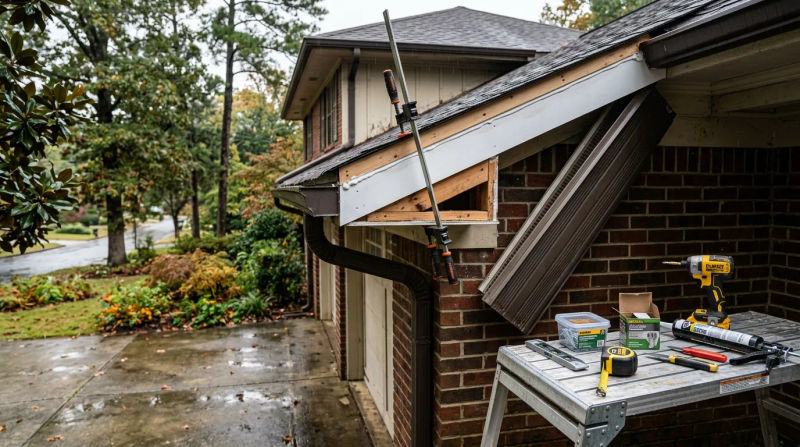
When a strong storm blows through Birmingham, the first thing most homeowners do is check for obvious damage - fallen branches, missing shingles, or fence damage. But some of the most common issues are also the most overlooked: loosened soffit panels and water-damaged fascia boards. As Fleet Operations Manager, I see the spike in calls after every late-season tropical storm. Homeowners are understandably concerned about how to fix the damage and, more importantly, how much it will cost.
Cost is a top concern, and it’s often hard to find straightforward answers online. The goal of this guide is to provide transparent, realistic information about soffit and fascia repair costs in the Birmingham area. We want to help you understand the factors involved so you can budget effectively and protect your home from further damage, like water intrusion or pest infestations, before they become bigger, more expensive problems.
Average Costs in Birmingham
After a storm, the most pressing question is, "What is a fair Birmingham soffit repair price after wind damage?" While every job is unique, we can provide some realistic price ranges based on the typical projects our technicians handle across the metro area. These figures include both labor and standard materials.
- Minor Soffit Re-attachment: If high winds have simply pulled a few vinyl or aluminum soffit panels loose from their channels, the repair is relatively simple. For a straightforward re-attachment job on a single-story home, homeowners can typically expect to pay between $250 and $550. This covers the labor to securely fasten the existing panels, ensuring they are properly seated and protected against future gusts. This is often the most common `handyman soffit reattach cost near me Birmingham` inquiry we receive.
- Small Section Fascia Board Replacement: When a section of the wooden fascia board has started to rot due to prolonged moisture exposure, replacement is necessary. For replacing a 10- to 20-foot section of fascia, the fascia board replacement cost Birmingham AL typically ranges from $400 to $800. This price includes removing the old, rotted board, installing a new pre-primed wood or composite board, and ensuring the gutters are properly aligned.
- Combined Soffit & Fascia Repair (Per Linear Foot): For more extensive damage affecting both components, pricing is often calculated per linear foot. Depending on the materials used (vinyl, aluminum, or wood) and the complexity of the job, you can expect to pay $20 to $40 per linear foot. This would include removing the damaged sections, inspecting the underlying rafter tails for rot, installing new materials, and sealing everything properly.
Factors That Affect Price
The ranges above are a good starting point, but the final soffit fascia repair cost can be influenced by several key variables. Understanding these factors will help you decipher any estimate you receive.
- Extent of Damage: The biggest price driver is the scope of the problem. Re-securing a single 12-foot panel is a quick job. However, if that loose panel allowed water to get into the attic and rot the underlying wood structure (the sub-fascia or rafter tails), the project becomes much more complex and costly. What looks like a small issue on the surface can sometimes hide more significant structural repairs.
- Material Type: The material of your soffit and fascia significantly impacts the price.
- Vinyl & Aluminum: These are lightweight, affordable, and low-maintenance. They are the most common materials used today and are generally the most cost-effective to repair or replace.
- Wood: While classic, wood requires more labor. It needs to be properly primed, painted, and caulked to protect it from moisture. If you have wood fascia, repair costs will be higher due to the extra finishing steps.
- Accessibility and Home Height: Is the repair needed on a single-story ranch or a two-story colonial? Our technicians can work more quickly and safely on a single-story home. Repairs on second or third stories require taller ladders, additional safety precautions, and more time, which increases the labor cost.
- Local Context: Many homes in Birmingham neighborhoods like Bessemer were built in the 1950s. These classic ranch-style homes are typically single-story with low-pitched roofs, which often makes accessing the soffit and fascia easier and potentially more affordable than on newer, multi-story houses.
- Pest and Animal Intrusion: A gap in your soffit is an open invitation for wasps, squirrels, and birds to build nests in your attic. If our crew discovers an active infestation, it must be handled properly before repairs can proceed. This may require coordination with a pest control specialist, adding another step and cost to the process.
How to Get the Best Value
Getting the best value doesn’t mean finding the cheapest price; it means investing in a durable repair that prevents future issues. Here are a few practical tips from my experience overseeing our field operations.
- Act Quickly: Don't wait. A loose soffit panel can allow wind-driven rain directly into your attic, leading to water-stained ceilings, saturated insulation, and mold growth. A small, affordable repair today can prevent a multi-thousand-dollar remediation project down the road.
- Bundle Small Jobs: Most professional handyman services have a minimum charge for a visit. If you only need one soffit panel re-attached, consider what other small tasks you have. Do you have a loose gutter, a sticking door, or a piece of trim that needs caulking? Bundling these tasks into a single service call maximizes the value of your technician's time on-site.
- Consider an Upgrade: If you have older, high-maintenance wood fascia that is starting to show signs of rot in multiple places, it might be more cost-effective in the long run to replace the entire length with modern vinyl or aluminum-wrapped fascia. This eliminates the need for future scraping and painting and provides a more durable, long-term solution.
Questions to Ask Your Contractor
To ensure you're hiring a reliable professional, it’s important to ask the right questions. A reputable company will be happy to provide clear answers.
- Are you licensed and insured? This is non-negotiable. General liability and worker's compensation insurance protect you from any liability in case of an accident on your property.
- Can you provide an itemized estimate? A detailed quote should break down the costs for materials, labor, and any other charges. This transparency helps you compare apples to apples with other bids.
- What materials do you recommend and why? A knowledgeable contractor should be able to explain the pros and cons of different materials (e.g., vinyl vs. wood) for your specific home and budget.
- How will you handle unexpected rot or damage? Ask about their process if they discover more extensive damage once they open up the area. A professional will have a clear plan for communicating the issue and providing a revised estimate for your approval before proceeding.
- What is the project timeline? Get a clear start and end date. From my perspective managing our crews at Trust Key Transportation, a well-organized workflow is a sign of a professional operation.
- Do you offer a warranty on your work? A warranty on workmanship gives you peace of mind that the repair was done correctly.
Dealing with storm damage is stressful enough without the added worry of unpredictable repair costs. By understanding the key factors that influence pricing and knowing what to ask, you can approach the process with confidence and make an informed decision for your home.
For a personalized estimate in Birmingham, contact Trust Key Transportation for a free consultation.